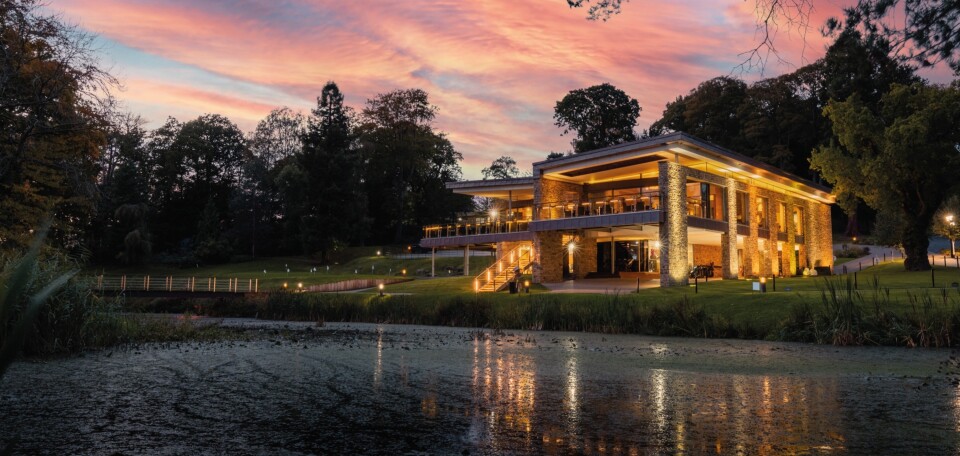
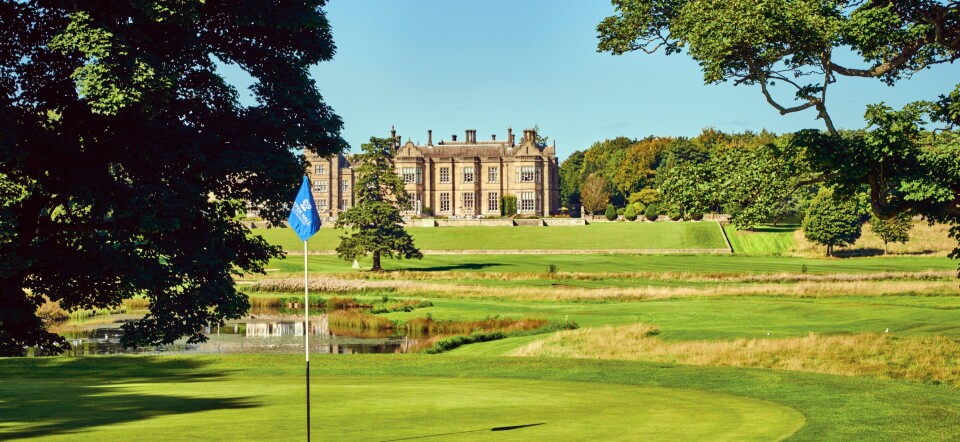
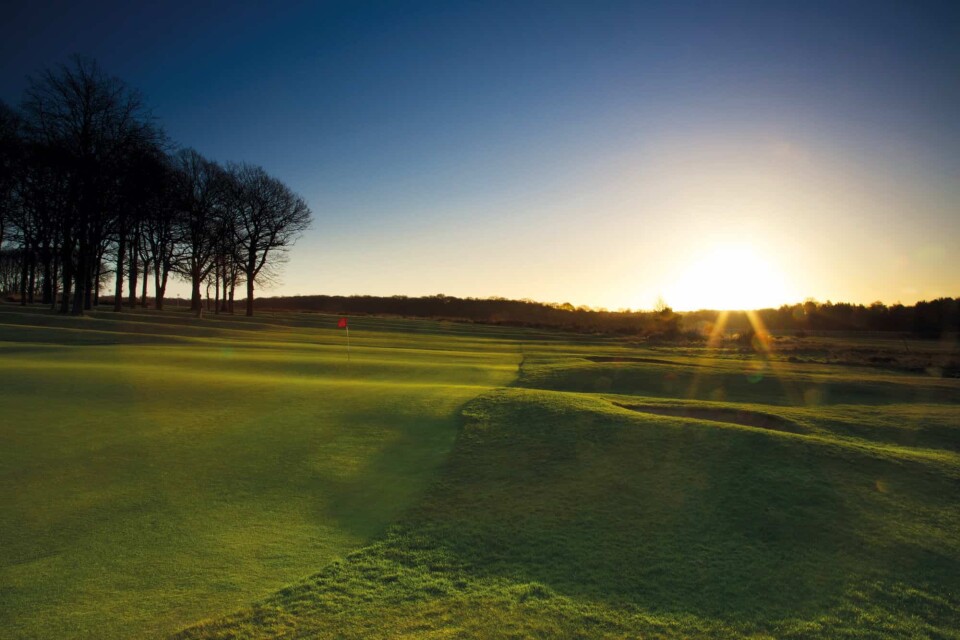
There are some places you just can’t go on the Colt Course: you’ll find yourself buried in deep fescue or in a spot where it’s difficult to play an approach. You’ve just got to be accurate – finding fairways and greens bring huge rewards. So it’s probably no surprise it’s so fondly regarded by attached professional Lee Westwood, one of the best drivers of a ball in the world. Bring a trolley to Close House, as you’ll definitely get a good workout on some strenuous climbs as you go round. The Par 71 layout almost reaches 7,000 yards in length, starting and ending by the gorgeous clubhouse.
It is a cracking start to a round on the Colt, with a lengthy par 4 to get you underway. Anything left will cause you issues off the tee, as the hole moves slightly to the left at the end. The 2nd is the first sign of climbing uphill, and it plays longer than its carded yardage of 390. Avoid the two fairway bunkers on the right with your tee shot, and then aim over the one on the left for your approach to the green. One of the easier par 4s on the course comes at the 3rd, with just a long iron required to find the generous fairway. From there, the approach is over two bunkers to a very large putting surface. The first short hole comes at 4, but it is not entirely short. It is more than 220 yards from the tips, meaning your tee shot on 4 arguably has to go further that is does on 3. Two bunkers front right of the green are a big danger.
The 5th is another par 4 that plays much longer than its yardage, thanks to moving severely uphill. That then works in your favour at the next, though, as the 6th works its way back downhill, playing shorter than its carded distance. Avoid the fairway bunker to the right, and then aim your approach down the right side of the green as it feeds around to the middle of the putting surface. The 7th is one of just two holes that are more than 500 yards, and it is a long par playing back uphill. It is a proper three-shotter, with only the very longest of hitters making it up there in two. The quirky 8th follows it, with the fairway split into two halves and water by the green. The same water hazard then guards the par 3 9th green. The approach is played entirely over water, and a sole bunker which also sits in front of the putting surface.
The 10th is a par 5 that basically is vertical for 500 yards, and this was actually the first hole when the International Series visited the venue in 2023. Again, like the 7th, it is a three-shotter for all bar the longest of hitters. The rewards come at the summit, though. From the 11th and the 13th, you’ll witness some wonderful views of the whole of the Tyne Valley. 11 is a par 4 which is basically split into two parts thanks to the trees that cut in to the fairway. The 12th is the first of two par 3s on the back side of the Colt Course, and the longer of the two at almost 200 yards. Three bunkers sit in front of the surface, so the tee shot has to carry all the way to the green.
The 13th is carded as 448 yards but is severely downhill. Playing from the trees, the hole opens out with drives travelling much further than usual. The par 3 14th is one of the most picturesque on the course. It’s the calm before the storm, too, with the 15th – and its terrifyingly tight drive – just a couple of shots away. Your tee shot shoots through trees enclosing either side and the back of the green, so it is difficult to accurately assess the wind. All the danger comes if you are short on 14. The trap and a deep drop into some tangly stuff awaits anyone a little to the right. It plays around 175 yards from the tips and isn't the Colt’s hardest hole, but it might be the prettiest.
15 and 16 are arguably the two toughest par 4s on the Colt, with both playing as dog-legs to the left. The former is the Stroke Index 1, and it requires an accurate drive played over water and the brow of a hill to a fairway that you cannot see. The green is large, but it is very easy to three-putt (or even worse). The 16th has the narrowest fairway on the course, and you need a drive of at least 250 yards to get to the corner to give yourself a chance of even just seeing the green with for your approach. The green is below the fairway, so it plays a club less.
The penultimate hole is a great par 5. There is a wide landing area from the tee, and the green can be reached in two for the longer hitters, but a huge oak tree stands in the way for those playing from the left side of the fairway. The 18th is a tough finishing hole, with water in front and right of the green. A singular fairway bunker sits on the left side of the short grass, and the approach has to be accurate, with trees on the left of the green, along with the water hazard.