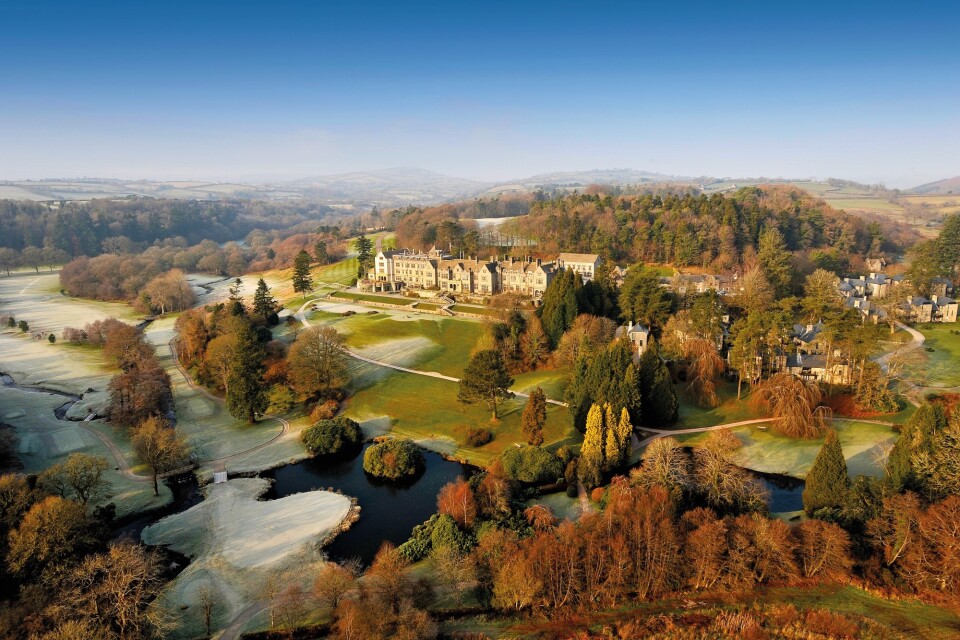
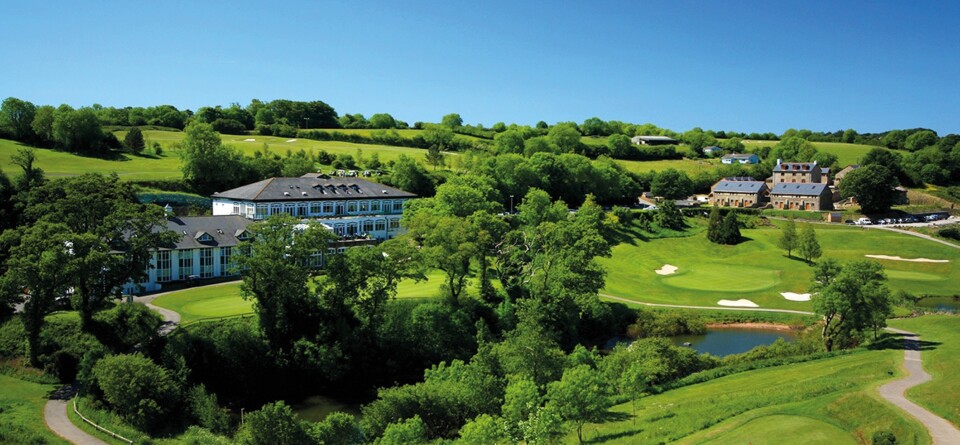
There is no doubt that East Devon is one of the highest golf clubs in the country in terms of its elevation, with points sitting as high as 450 feet above sea level, despite the sea only being a stone’s throw away at times. It’s a heathland for the most part, with a touch of moorland and even a parkland flavour as well. The fairways and greens are wonderfully firm, no matter the time of year. It is not the longest course in the world, playing just shy of 6,300 yards from the Black tees, but this Par 70 offers up its challenges.
The opening two holes play out and back to the clubhouse, and are very similar. Both are under 350 yards, meaning there is the chance to get your card going early. The 1st green is surrounded by trees, while the 2nd has sand traps to avoid but both provide birdie chances if you can find the fairway with your tee shots. Playing away from the clubhouse once more, the 3rd is the hardest hole on the property at East Devon. It is a slight dog-leg right, and the fairway gets narrower the further down you hit your drive. A long, narrow green awaits approach shots, making it a very tricky hole.
The first of the quartet of short holes is the 4th, which is just 140 yards long. The green is round, and has three large bunkers in front of it. Club selection is vital on this par 3. After the medium-length 5th, you get to the first of just two par 5s on the property – the 6th. It is the longest hole at East Devon by some distance, coming in at more than 555 yards from the tips. With trees down the entirety of the left side, and out of bounds lurking down the right, it is a difficult hole to get right, especially if your driver has not been your friend in the early part of the round.
You then get to the 7th, which almost feels like it doesn’t belong at East Devon. It seems to be on a completely different piece of land and is parkland in nature. It is a dog-leg left par 4, and you feel crowded by the trees that surround the hole. It opens out again for the 8th, the most difficult of the par 3s. It plays 204 yards from the tips, to a small green, so a par is a great score. The front nine comes to a close with the longest par 4 on the course. 9 is 465 yards long but thanks to its wide fairway, it is a hole where you can take driver without having to worry.
The back nine kicks off with a par 3, played to a large green. However, no fewer than six bunkers guard the putting surface if you are to miss it. Two large cross bunkers are the feature on 11, but if you miss those, then a birdie is a possibility. The 12th is the only par 5 on the back side, and plays as a dog-leg right. A relatively wide fairway should mean that you can go after your drive, and if you find the flat stuff, then going for it in two might be worth it. The 13th is the last of the short holes at East Devon, and has four large bunkers surrounding the green.
The course ends with five par 4s, all of which have their own challenges. 14 is a sharp dog-leg right, and if you can play a fade (draw for you lefties), then it is to your advantage as the turn comes very early in the hole. If you play to the corner, you will be left with a long approach to a narrow green. The 15th is only 300 yards long but with trees down the right side, longer hitters may opt to play safe with an iron.
Take a moment when you get to the 16th tee to take in your surroundings. Look to your right and you can enjoy the view over the Devon Cliffs and out to the English Channel. Then it’s back to business for the final three holes!
The 16th features two bunkers on the right of the fairway which must be avoided at all costs, while the penultimate hole is the longest of the five par 4s to finish. It comes in at 450 yards, and plays as a dog-leg left. The fairway ends abruptly due to heather, leaving you with a long approach to a small green. The closing hole at East Devon sees you tee off over another expanse of heather, to a fairway that runs diagonally from you. The green is large and inviting, but anything wayward will be caught up in the three bunkers.