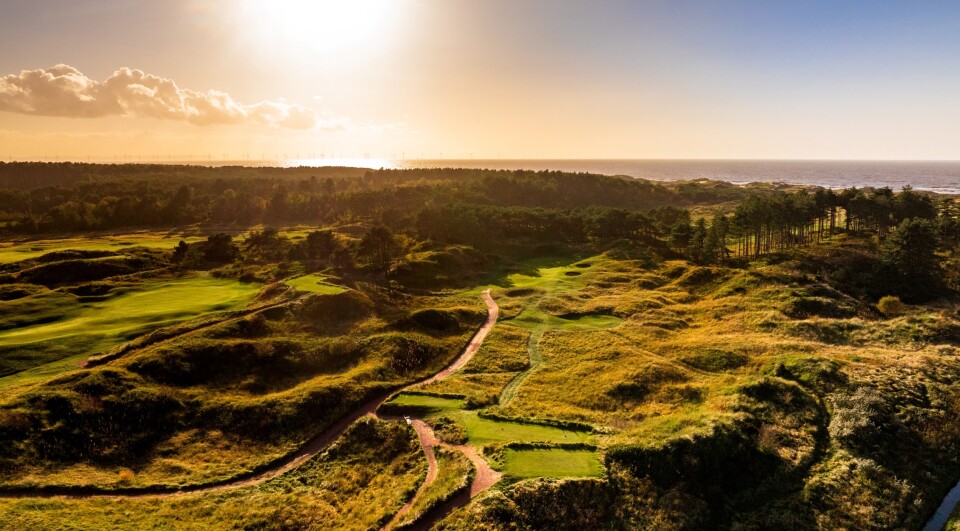
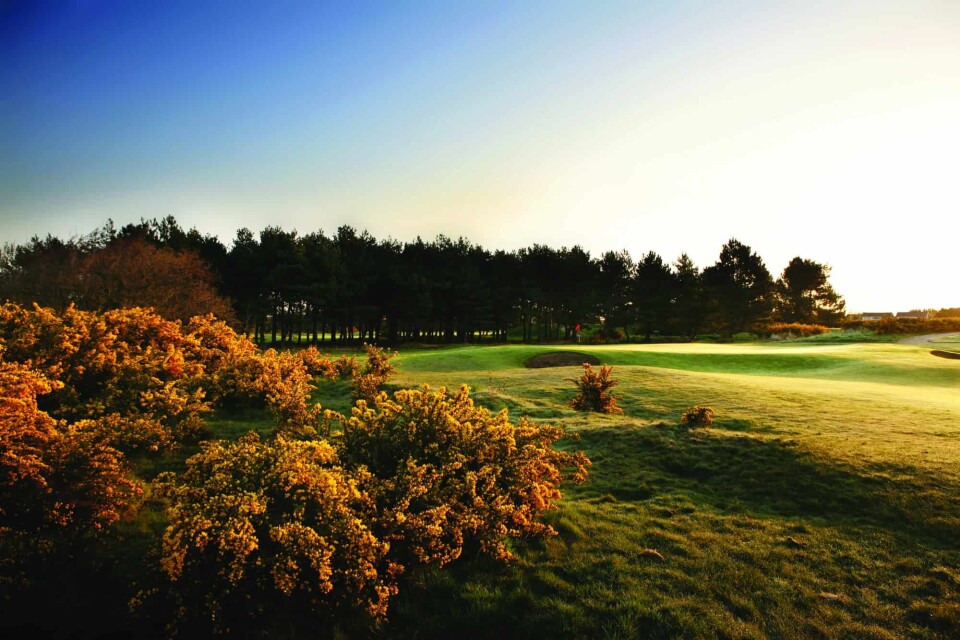
In the midst of a region dominated by seaside golf – most notably the three Open-hosting Royals of Lytham, Birkdale and Liverpool – Formby offers welcome respite. Not in terms of the challenge, it must be said, at a championship course recently lengthened to the now-mandatory 7,000 yards and notable for the demands it places on solid, accurate driving. More because with several holes flanked by trademark pines it has a level of shelter and gentleness quite lacking from true links. It is one of those special courses resistant to easy classification. If Ganton really is an inland links then Formby is a seaside woodland course.
Indeed, in relatively recent times Formby has acquired an even more inland feel. In the early 1970s the club were forced to abandon three coastal holes that were gradually being eroded and create replacements further inland. The result is a course that only occasionally feels like a seaside one despite being constantly close to the Irish Sea. Indeed, it comes as rather a shock when, as happens sporadically here, you emerge from relative shelter to be exposed for a few moments to the full force of the wind.
Originally a nine-holer back in 1874, multiple Open champion Willie Park laid out the original 18 with the ubiquitous James Braid helping to redesign the closing stretch to take the holes away from new housing early in the 20th century. In the 1970s Martin Hawtree designed the three new holes and now, from the blue tees, the original bunkering is brought back into play. This is nowhere better in evidence than at the long 3rd.
Not only does the new tee stretch the hole to over 530 yards, it also creates a new angle for the drive. Anyone wanting to have a chance of reaching the green in two must take their drive over heavy rough and a nest of bunkers on the angle of the dogleg. It is a demanding shot, but the rewards are sufficiently high to be tempting. In short, it is everything a good par five should be. Other highlights include the 7th, as difficult a 420-yarder as you are likely to find.
The fairway is narrow and looks more so because of the trees on either side, while the green is elevated and to the right. Effectively, to find it you need to be on the left side of the hole and since it slopes severely from back to front three putts are possible from just about anywhere. From the turn the land is more open and the long par fours come thick and fast – five in a row from the 11th – and while none by itself is especially terrifying together they form a decisive stretch of holes. The short 16th is a welcome interlude before the best birdie chance of the day at the par-five 17th.
It may be, in time, that the club decide to move the back tee at the last further into the trees. Certainly, as it is, the tee shot disappointingly lacks definition for the culmination of a course of such calibre.
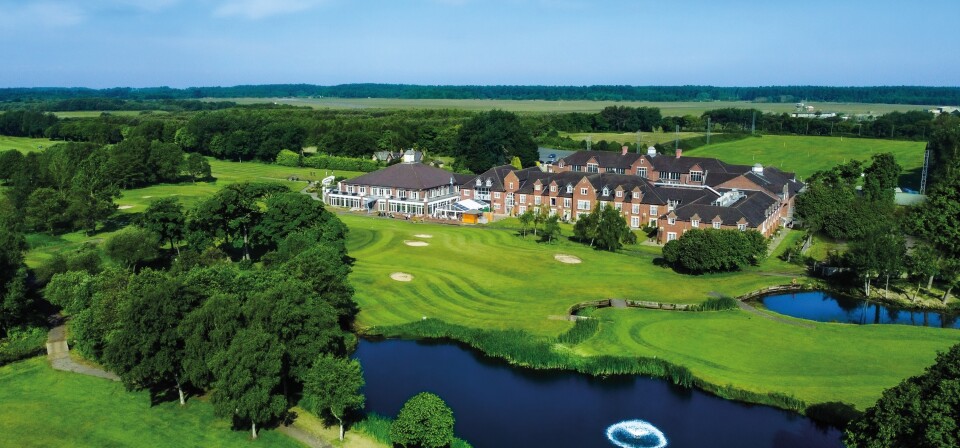
Alongside the amazingly large, flat putting surface – a design philosophy of Braid’s was that the final green ought to be welcoming and gentle, so that a golfer might hole a putt and leave with fond memories and therefore be encouraged to return – stands Formby’s imposing clubhouse.