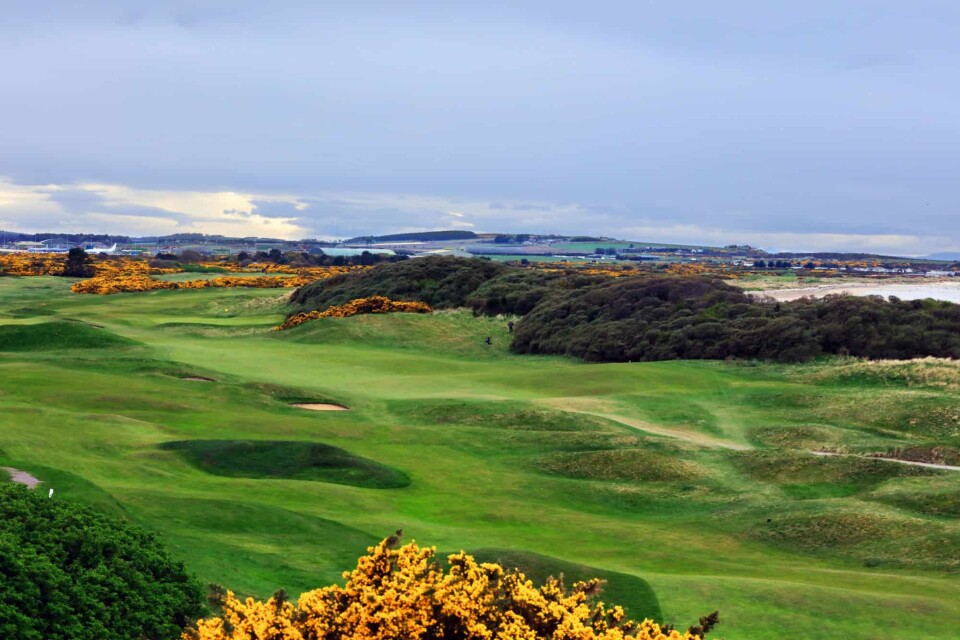
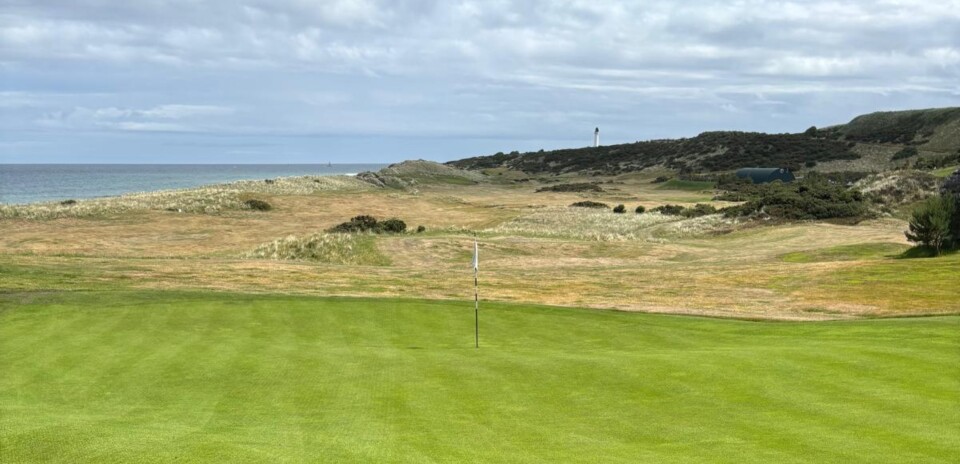
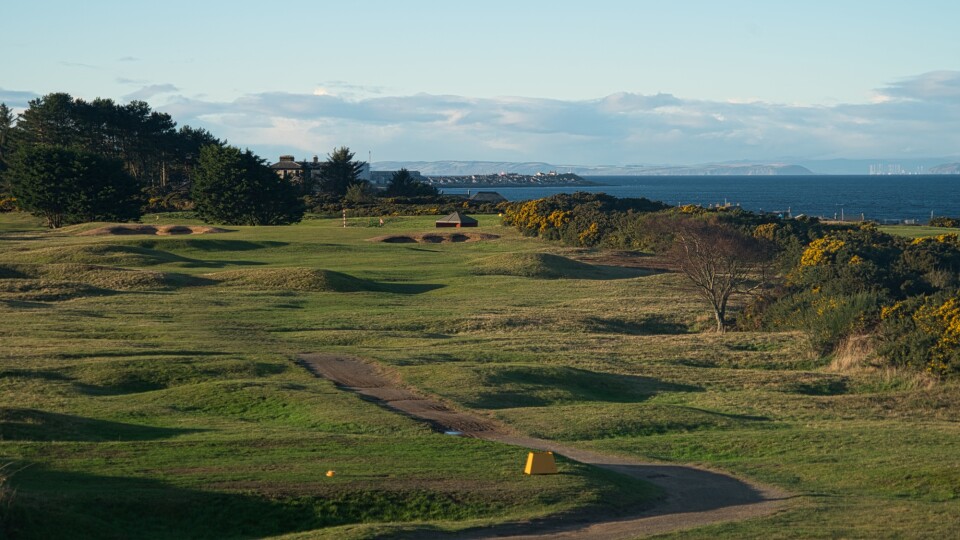
Even now, some 40 years since Henry Cotton was called in to create what stands today, you sense that the New Course is still regarded as the lesser course at Moray. Cotton did an outstanding job of intertwining the New with Morris’ Old Course, and despite the layout’s short distance of just over 6,000 yards, there are plenty of challenges. The fairways are generally lined with gorse, there is the occasional burn to avoid, and the small greens can present awkward targets, especially if you are out of position from the tee. The New Course at Moray begins with a gentle opening hole. Thanks to the 18th coming in the opposite direction, there is a very wide fairway, with plenty of space to the left. The 2nd is narrower, but it is only 325 yards, so driver is not necessarily needed. The first of just two par 5s on this Par 70 layout comes at the 3rd. It plays as a dog-leg left around the trees and gorse, but at only 480 yards, it is certainly one that is reachable in two shots. Two short par 3s come within the space of three holes around the middle section of the front nine. The 4th sits at 132 yards and features three greenside bunkers, while the 6th is ever shorter. At just 100 yards from the tips, most will need just a wedge to find the green. However, a burn runs in front of the putting surface. There are no bunkers but this shallow green requires accuracy and correct club selection. In between is the par 5th, which features the same burn at its greenside. There is a single bunker right of the putting surface to also avoid. The test of the New Course at Moray begins at the 7th. Both 7 and 8 are testing par 4s of more than 410 yards. Both play pretty straight, but fairway bunkers, narrow fairways and small greens make them a tricky prospect – especially as you’ll be coming in with more club in your hand. The 9th and 10th are a couple of fantastic short par 4s, the latter played across vintage and crumpled linksland. Both are sporty, offering birdie chances, but they are certainly not without danger. Both play across the same burn that interferes with 5 and 6, while the 10th runs alongside the beach, with anything right off the tee seeing you reach back into your golf bag for another ball. At 151 yards, the 11th might seem long compared to the par 3s you have already encountered. However, as you play back inland from the beach, take note of the wind to calculate what distance the hole is actually playing. The 12th and 13th take you to the western boundary of the property, with out of bounds down the right side of both holes. The latter has no bunkers, but an undulating fairway and a small putting surface to find. 14 is the longest hole on the course, and it is also the hardest in terms of stroke index. At 515 yards, this par 5 also features the burn which runs through the layout. If you decide to lay up, then the burn has to be taken into consideration. If you go for it, there is a little room either side of the green. The closing stretch at the New Course continues with the dog-leg right par 4 15th, which runs around the road that takes you to the golf club. 16 then plays the other way, turning left around the trees and gorse, and again to a green that is not guarded by sand traps. The penultimate hole is the longest par 3 on the course, and easily the most difficult. It measures 180 yards from the tips, with four greenside bunkers and plenty of other danger. The 18th has that wide fairway as mentioned earlier, thanks to linking with the opener. Find that, and the long but narrow green is in play. A par on the last – which is 420 yards from the tips – is a good score to finish your round on the New Course.