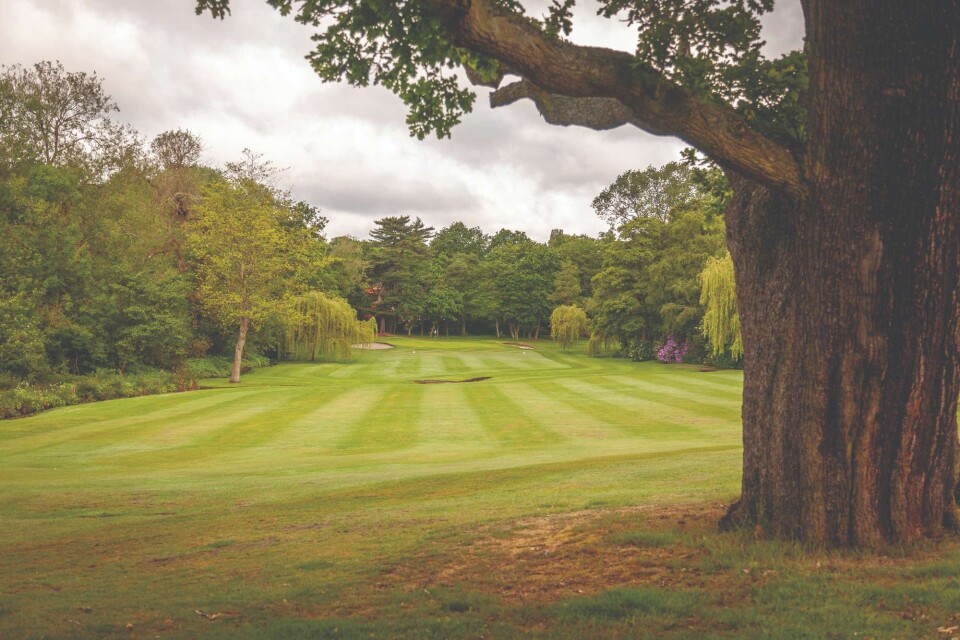
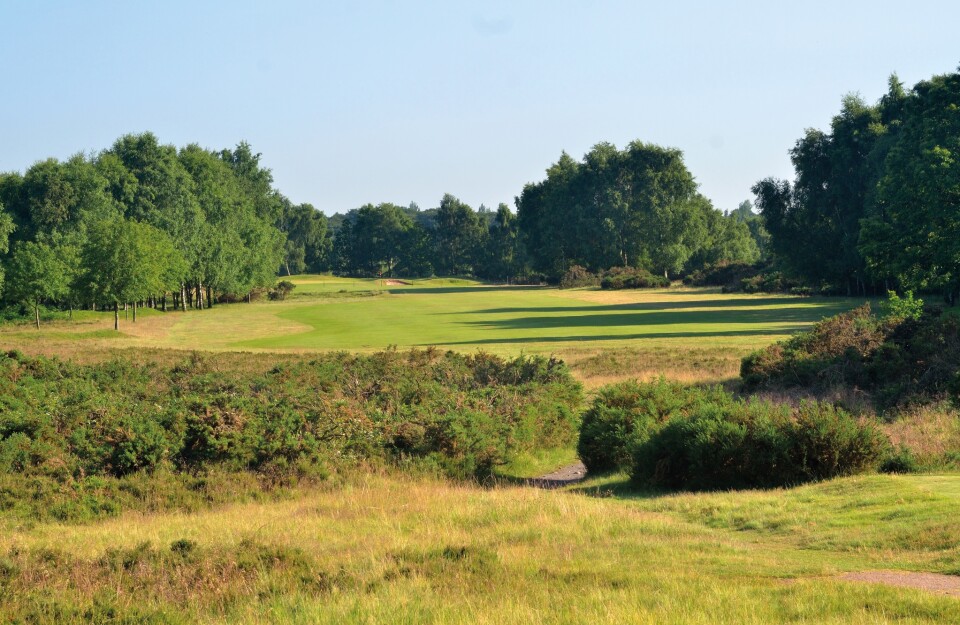
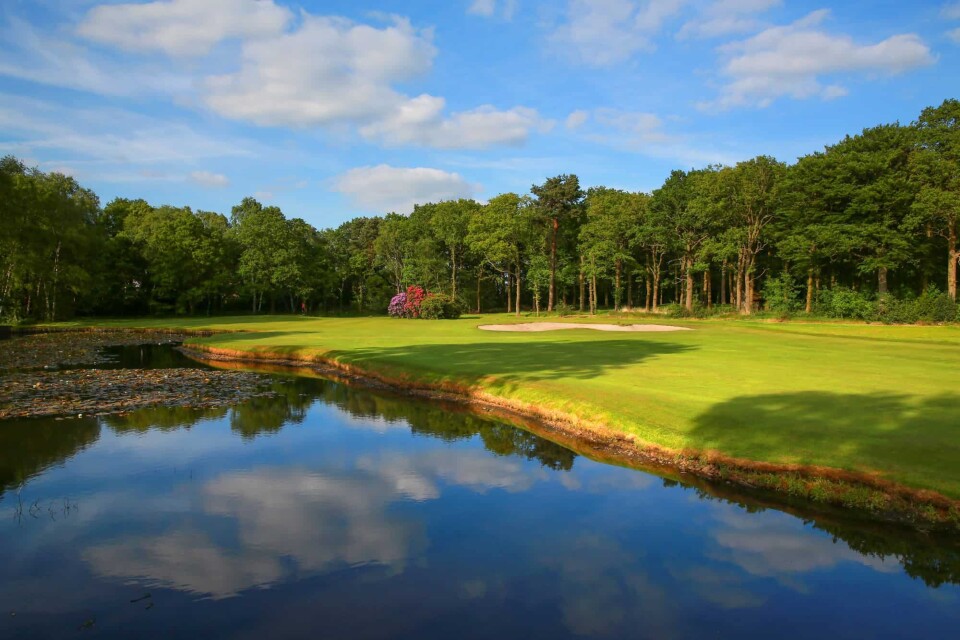
Sandwell Park demands difficult carries and requires careful placing of shots that have to be given a great deal of thought. With naturally undulating fairways that create difficult and testing approach shots to the greens, and greens renowned for their borrows and speed, there are plenty of challenges. The picturesque course wanders over wooded heath land, and each hole is entirely separate, shielded from the others by either natural banks or lines of trees. The course runs to just shy of 6,500 yards from the tips, with the par 71 featuring a quartet of cracking short holes.
It begins with a trio of long par 4s, so there is no easing your way into a round at Sandwell Park. OOB runs down the left side of the 1st due to the practice ground, and there is a ditch around 300 yards from the white tees. It is the longest par 4 on the property, so a bogey to start is not the worst result. Your tee shot on 2 needs to cover the two bunkers that are in the centre of the fairway, carrying around 215 yards to do so. Even from there, it requires an approach of at least 200 yards. Two bunkers guard the putting surface to make the approach that touch more difficult. The 3rd is also more than 400 yards, and it plays slightly uphill as well. A bunker sits in the middle of the fairway at the 275-yard mark, with another to the front left of the putting surface.
The tricky opening run continues with the longest of the par 3s. The 4th is 199 yards, with a green protected by five bunkers – four of which are to the front right. The opening par 3 is followed by the first two par 5s at Sandwell Park. The 5th is the Stroke Index 2, so you’ll need to play this hole well to have birdie putt. At 510 yards, it is not the longest of par 5s, but the two bunkers in the fairway at the 270-yard mark make it more difficult. Add in the ditch that is around 20 yards short of the green and you have a decision to make as to whether you try and go for it with your second. The 6th is slightly longer at 525 yards, but it is from an elevated tee with the fairway running downhill, so a good drive here will then fire forward. The longer hitters will fancy their chances of getting home in two, to a green that is 40 yards in length.
The par 3 7th is the easiest hole on the course at just 165 yards. The five bunkers surrounding the green might make you think slightly differently about this hole. 8 is a good birdie chance at just 315 yards from the tips. A good drive, avoiding the trees and the fairway bunker down the right side, will leave you in a good position for a short pitch on to this putting surface. The front nine’s final test is a 360-yard par 4, and another opportunity. It is a slightly uphill fairway, and one that features a ditch start at the 240-yard mark, though it runs away to the left of this hole. The green is long, so check the distance for your approach.
The last, and longest, of the par 5s comes at 10. It is just shy of 530 yards, and features OOB down the entirety of the right side. A fairway bunker on the left is in the landing zone, while there are two more by the green which can be used as aiming points for your lay up. Although only 290 yards, the 11th is not as easy as it might seem. A large bunker sits on the right of the fairway, requiring a tee shot of 200 yards to carry it. However, there are then two more traps in front of the green. Find the fairway to give yourself the best chance here. Accuracy is the key on 12 – a 190-yard par 3. It does play slightly downhill, and it is one of the most picturesque holes on the property. The 13th is the longest par 4 on the back nine at 410 yards. It is a dog-leg left, and requires an accurate drive to the corner. A bunker on the inside corner can be carried with a tee shot of 210 yards. An approach of about the same might be required for those playing out to the right off the tee.
The closing stretch features four par 4s, all of which are under 400 yards. However, don’t expect an easy run for home. Throw in a tricky little par 3 as well, and it is a run where many a match has been won or lost over the years. The 14th has a wall down its right side, and the approach is played to one of the smallest greens on the course, while 15 is the Stroke Index 1 at Sandwell Park. A good drive will find the downhill slope to take it to the flat, before the hole then rises up to the green once more. Runoffs on both sides make the green a difficult target to find, no matter what club is in hand.
The 16th is the Fred Hawtree-designed par 3, and it features a 42-yard-deep green that has two tiers. It is one of the most difficult greens on the property, and requires an accurate approach to the right spot. 17 is a dog-leg left, with a drive of anything more than 200 yards running the risk of finding either of the two fairway bunkers down the right side. The green is long with a bunker on either side. The homeward hole at Sandwell Park plays uphill back to the clubhouse, and slightly longer than its carded 388 yards. OOB behind the green and to the right of it (where the 1st tee is) add to the danger, along with the large cross bunker which sits 20 yards in front of the green.