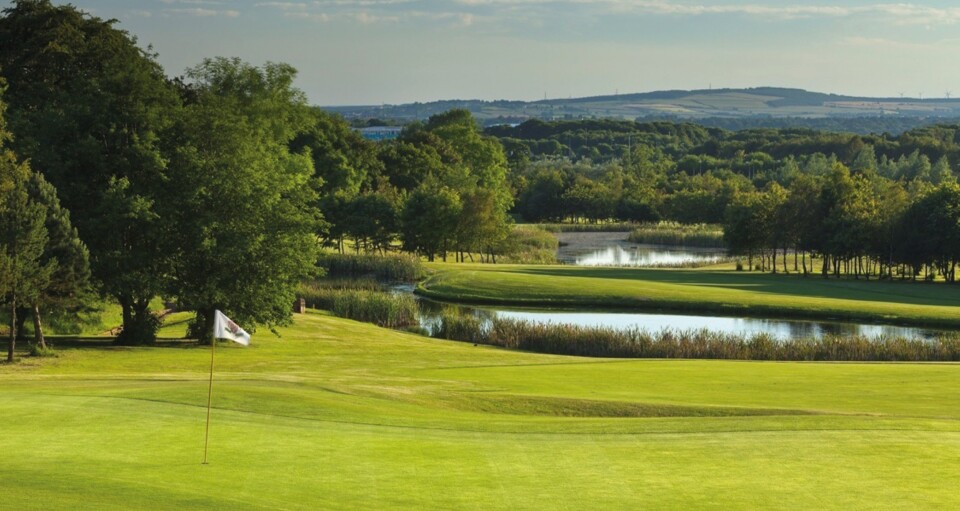
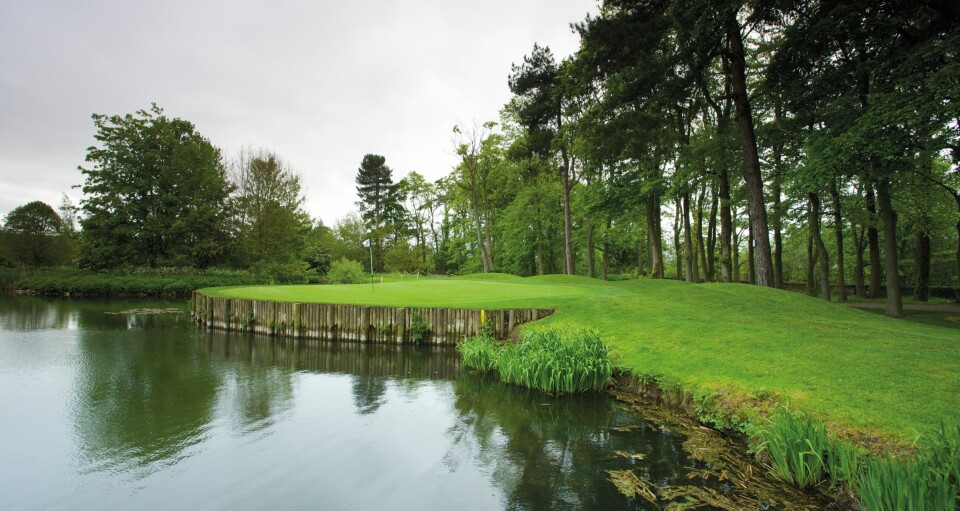
Sitting with the castle itself as a backdrop, Brancepeth Castle is a great parkland course, one that features a ravine cutting through it to cause trouble on a number of tee shots. The front nine plays as the outer loop, with the back nine running through the middle of the course. Pushing back to almost 6,400 yards off the back tees, Brancepeth is no slouch, especially with large deciduous trees that line the majority of fairways.
It is a gentle start at Brancepeth, with a 335-yard par 4 to kick things off. Finding the right spot on the undulating fairway is the key to having a shot at birdie. Next comes the first, and the shortest, of the quintet of par 3s. The 2nd is just 154 yards long, but the green is 44 yards wide. Played across the ravine for the first time, make sure to take enough club! The Stroke Index 1 comes early on – at the 3rd. At 445 yards from the tips, and with a group of tall trees cutting in to the right side of the fairway, the tee shot has to find the left side to have a view of the green with your second.
Playing off the back tees will allow you to take drive on the 4th, as the edge of the fairway and the ravine don’t come into play. Make sure to take enough club on your second to clear all the trouble. The 5th is the longest par 3 at Brancepeth, measuring in at 218 yards. Two bunkers guard the green, one on either side, while the view of the putting surface is somewhat obscured by a mound. At 591 yards, the 6th is easily the longest hole on the property, and a brute of a par 5. It will be a true three-shotter for all bar the very longest of hitters, while the putting surface is small, and you’ll want to be hitting a wedge into it, for sure.
“Disaster is immediately in wait on at least seven of the holes in the form of the ravine that intersects the course” - Peter Alliss
The 7th tee shot has to come through a funnel of trees to make the fairway, with thick trees lining the left side of the fairway throughout. 8 is a great short par 4 with plenty of ways of playing it. Longer hitters will aim straight at the green to cut out the trees, while shorter hitters will have to aim further left and play it as more of a dog-leg. The signature 9th hole is a truly memorable one about which Peter Alliss has said that if he could choose 18 holes around which to create a golf course, the 9th at Brancepeth would certainly be one of them. Like the 2nd, the green at the 9th was cut out of the hillside. The difference here is that the tee shot of about 200 yards is played along the length of a narrow green which slopes away from the tee. Having hit what is a very difficult target the player may be faced with a downhill putt on a green which is incredibly fast.
It is back-to-back par 3s around the turn at Brancepeth, with the 10th also being a one-shotter. Like the 9th, it is more than 200 yards from the tips, and it played over the ravine once more. This is a very difficult section of the course, and it continues with the 11th, the Stroke Index 2 at Brancepeth. A blind tee shot through a funnel of trees kicks it off, with a pair of fairway bunkers as extra danger. Two more traps sit by the green. If you can avoid the three fairway bunkers off the tee on the downhill par 5 12th, then there is a good chance of birdie. 13 is a strong par 4, and although the second shot is slightly downhill, it might still require a long iron or fairway wood.
The closing stretch begins with a short par 4 of 320 yards. Thick trees down the right side might steer you away from taking driver, with finding the fairway being paramount to have the best chance of hitting the bowl-shaped green. 15 is the last par 3, and at 160 yards, one of the shorter ones. Again, it is over a valley, meaning that the ball has to carry all the way to the surface. At just 480 yards, the par 5 16th is another birdie opportunity late on. You can take on the green with your second if your drive is far enough right to avoid the big trees. 17 and 18 are par 4s, but both very different. The former is long and straight, while the final hole at Brancepeth plays differently depending on how far you hit the ball. Longer hitters can be rewarded as they can find the flatter part of the fairway to make it an easier shot to the last green.