Once the imposing wrought-iron gates have slid back and you arrive on the property, it is almost impossible to imagine you could be within 20 miles of one of the world’s largest cities. Never mind scoring or competing, it feels as though even playing a round constitutes taking the game a little too seriously here. Perhaps those members lucky enough to have spent most of their lives playing here become a little blasé, but for us each game here is a marvel.
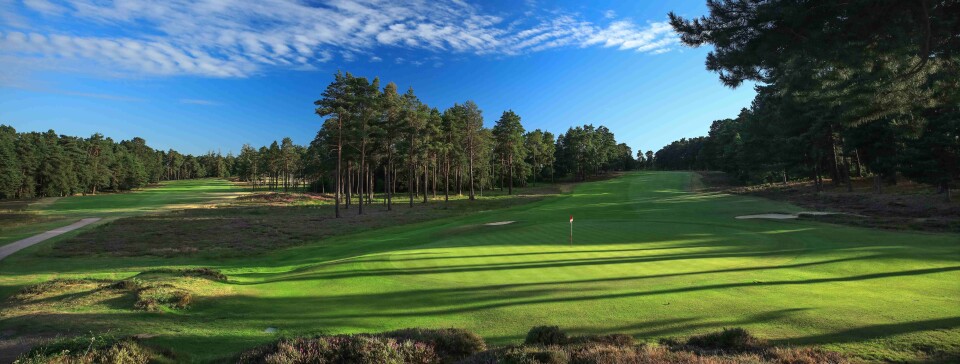
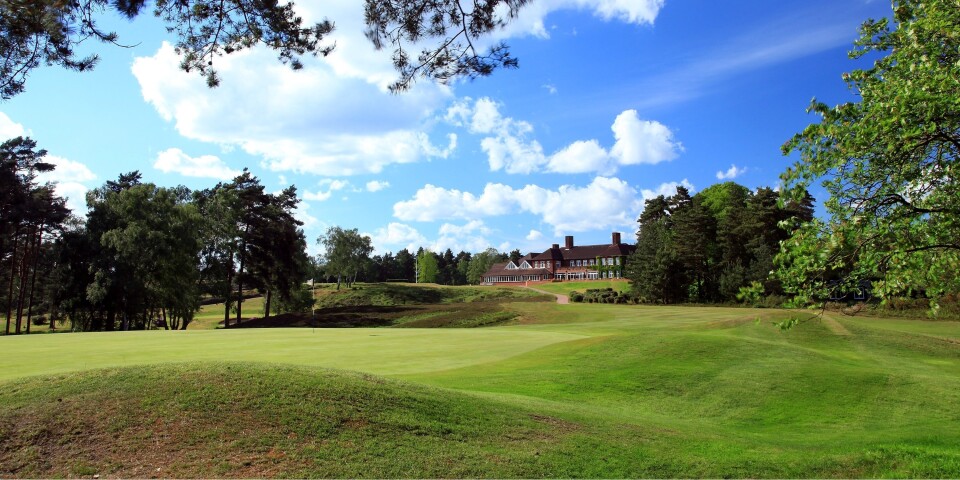
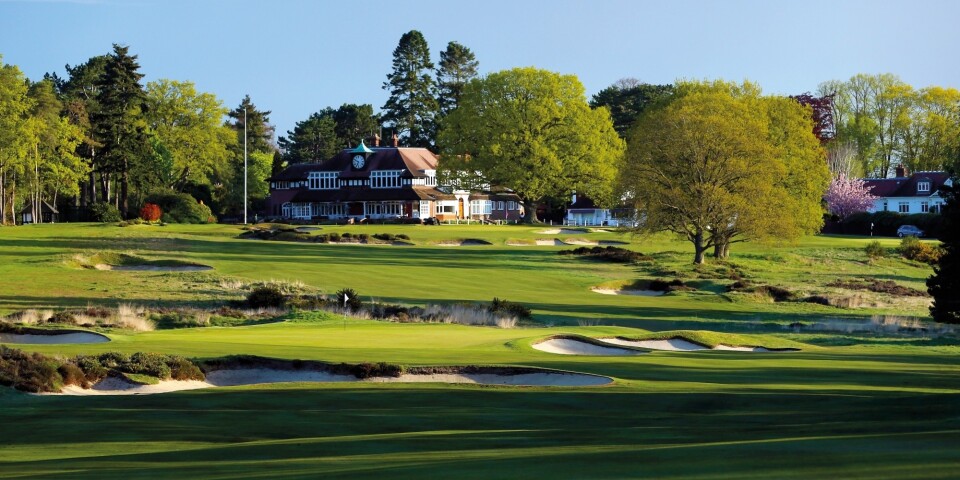
Heathland in nature, the turf is firm and springy. Heather, trees and sometimes Rhododendron bushes flank the holes. Hilly in places but never exceptionally so, it offers a quintessentially British equivalent of Augusta National. Needless to say for a course that considers itself excessively busy if 50 golfers play on the same day, the conditioning is impeccable. Harry Colt, long-time secretary at Sunningdale, designed Swinley Forest back in 1909 and described it as “the least bad course” he had ever built.
It measures just 6,062 yards from the back tees, although it must be taken into account there are only two par fives against five par threes. And with five of the par fours measuring over 400 yards, it’s hardly a pushover. But that’s hardly the point. More importantly, each hole is aesthetically a delight, particularly the quintet of short holes.
From the redoubtable 10th, at 205 yards, through the stunning 13th, played downhill to a green framed by sand and trees, to the point-to-point 17th, only 170 yards in length yet its raised green surrounded by trouble and arguably harder to find with a recovery chip than a mid-iron from the tee.
Not to mention the glorious 4th, uphill all the way and with the large green defended by a steep-faced bunker on the left and the ubiquitous heather elsewhere. Two other holes particularly stand out, and both require drives of the highest calibre, preferably ones shaped from right to left.
The 9th involves a tee shot into a valley. The further right it is, the longer the second shot to a green at the top of the hill; the tighter it flies down the left the more the chance of the second being blind or even blocked out. The 12th is even better. This S-shaped double dogleg is a par five to most because unless the drive turns left in the air to follow the angle of the fairway, the well-struck shot will run though it into a bunker.
The difficulties of the approach – apart from its length – are determined simply by the contours of the land that dictate anything falling short or right is rejected. It is a wonderfully strong and imposing hole.