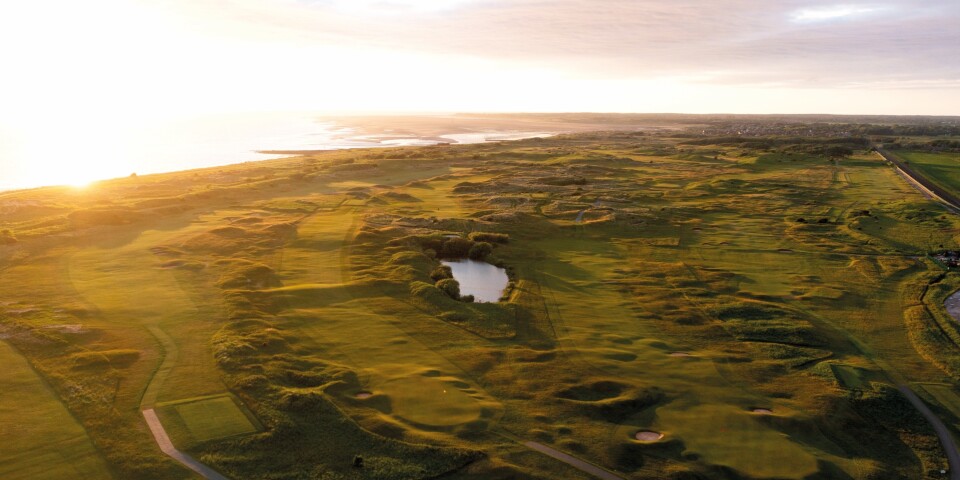
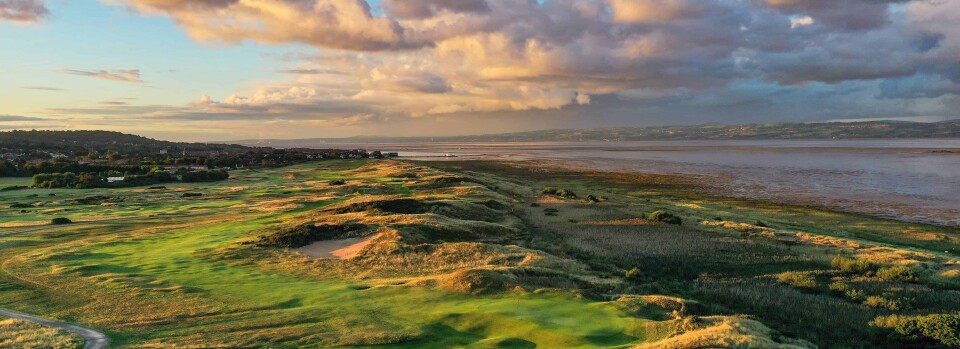
Sitting on the coastline of the Wirral, Wallasey Golf Club offers up a real challenge for golfers of all abilities. A number of holes play alongside the coastline, with the Irish Sea on their right, and with this Par 72 layout measuring around 6,600 yards from the tips, there is plenty to deal with – and that’s without even mentioning the usually brisk wind.
After a 1st hole that takes you from the very walls of the clubhouse towards the estuary, any sense of claustrophobia is immediately dispelled. Imposing dunes and elevated tees are the dominating themes - not to mention an unrelenting headwind – which takes you from the 2nd through to the 5th. Stand on the 2nd tee at Wallasey when a south-westerly wind is whipping across the Wirral from North Wales and it is easy to understand why it was here that the Stableford system of scoring was born. Measuring over 460 yards from the elevated and exposed back tee, with wild duneland either side of a fairway that curves right and to a distant green, it is a hole than can end a medal round almost before it has started. Dr Frank Stableford, a former captain of the club, despaired so much of his chances of making it through the opening run of holes that play into the prevailing wind with a score intact that he invented his new system of scoring in 1931.
The 3rd is another tricky par 4, with a slight dog-leg left as you aim towards the water with your tee shot. The most spectacular view is undoubtedly from the tee on the par-5 4th, with the fairway stretching out way below and with the sea to the right. Inevitably, there is a slight sense of anti-climax on reaching the flatter land the middle holes occupy. This is not to say the golf is anything less than worthy, only that it is less thrilling. The opening par 3 on the course comes at the 5th, and you play towards the corner of the property, and with the water as the background once more.
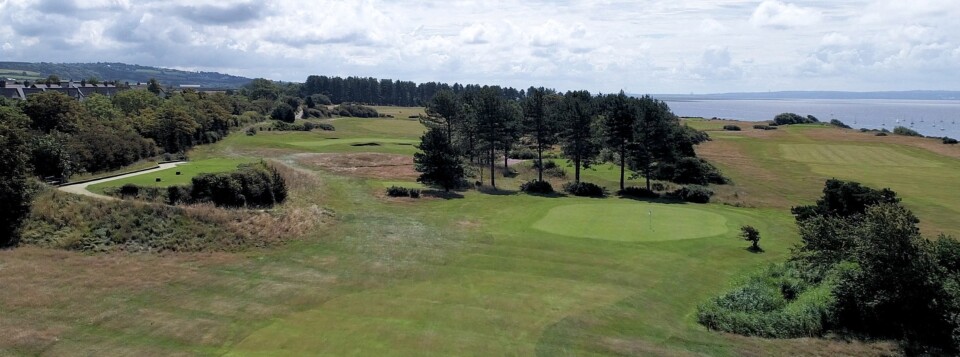
From there, you move inland with the 6th, before the par 5 7th provides one of the trickier driving holes on the course. Five fairway bunkers in the landing zone make accuracy the key. There are five more traps down by the green as well, just to make the 7th even more difficult. The dog-leg right 8th hole and the short 9th, played to an oval-shaped green and with trees as the backdrop, bring you to the end of the front nine at Wallasey. The opening hole on the back nine is a quirky dog-leg right. The longest of hitters may well try and hit a cut to find the putting surface from just 300 yards, but most will take a long iron or hybrid and play to the widest par of the fairway.
The 12th is one of the signature holes at Wallasey. A short par 3, usually playing less than 150 yards from the tips, is played to a small green, one that is guarded by five large pot bunkers. It is a hole where there is arguably more sand that putting surface, so you have to get your tee shot right. The 13th and 14th are a pair of par 5s which play in opposite directions, meaning on any given day one is a birdie chance and the other effectively a four-shotter for some. The 15th doglegs left and uphill to a raised green while the next is a not-so-short hole of the highest quality played to a target of a ledge, framed by a dune on the right and dropping away to the left. At 200 yards, the 16th is easily the longest of the four par 3s.
Then comes the 17th, where you can play left towards the 4th fairway if you are prepared for a longer second. Aim at the marker post and trust that the green is located underneath it in a dell. On the last, you must play unerringly towards the clubhouse, across rough and uneven ground to a green that is remarkably flat considering what has gone before it. Assisted by the breeze, a closing par four is by no means unattainable, perhaps even one worth three points.