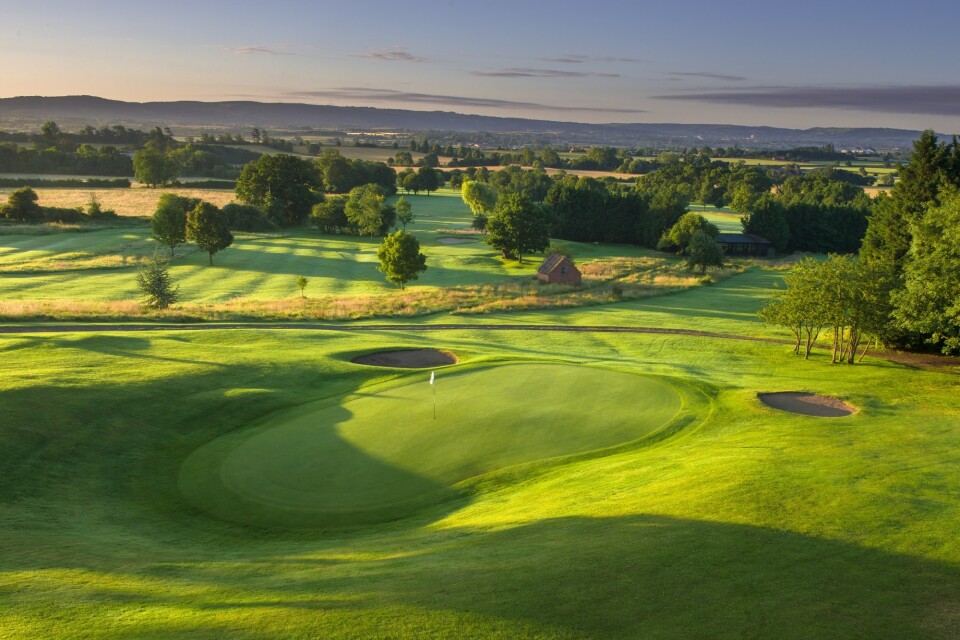
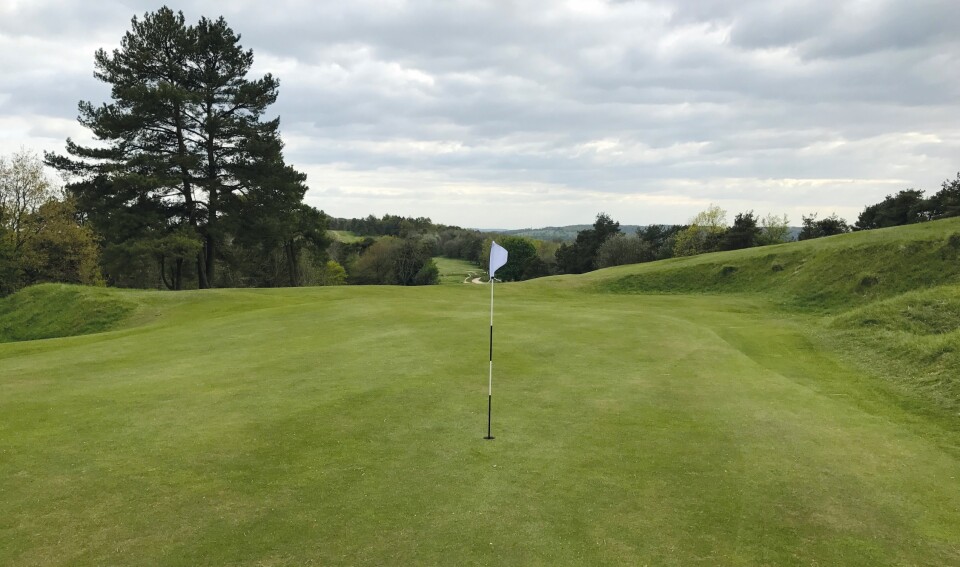
Cleeve Hill is above – being the operative word – the rest of its surroundings, but that does offer up panoramic views of the Cotswolds. If you don't 'get' Cleeve Hill, and not all golfers do by any means, then you will take one look at this pale, inhospitable, windswept landscape and retreat to your perfectly presented, sheltered parkland. The rest of us will be enjoying ourselves up at Cleeve as it gradually reveals its charms. The course is not the longest, playing just 6,400 yards from the back tees, but you are at the mercy of the conditions at this high altitude.
The way the course reveals itself is a delight – especially when you come to realise that there is a clever hole around every corner. With a total absence of trees, this is a course where those who can control their flight are at a real advantage and able to chase their shots on to the greens, staying out of the frequently gusting winds.
The layout begins with its longest hole, a 558-yard par 5. Fire your tee shot over the marker post and the brow of the hill and if you find the fairway, you might have a chance of going for the green with your second. Most will play safe and lay up, with a wide fairway and no bunkers in play. There is one sand trap down by the green, which is narrow. The 2nd is a short par 4 with a blind drive and you can have no idea what's over the brow – a tiny green cut into the hillside. From the wrong angle, it's nearly impossible to chip it close. The 3rd is drivable for some, at just 288 yards, and plays as a slight dog-leg right. The green is guarded by some gorse and is located above a mound.
The 4th is a par 5 off the Whites and a par 4 off the Yellows. Off the Whites, it is an easier hole, thanks to getting that extra shot. The green is guarded by three bunkers, around a narrow but long putting surface. The 5th is only 350 yards, and again has a narrow green, before you come to the first of four par 3s on the layout. The 6th plays over a gorge to a large green, and at only 137 yards, it is one of the easiest holes on the property. The toughest hole comes next, the Stroke Index 1 par 4 7th. Playing back up the hill, and at more than 400 yards, it is a tough test. 8 is a dog-leg left, but as with the majority of the course, you can flail it pretty much anywhere with your driver. One singular bunker sits by the putting surface. The final hole on the front nine is a straightaway par 4, and one that should not cause too much hassle.
The back nine begins with a long par 3, one of more than 215 yards. It is played over gorse to a small, round green, one that is difficult to hold with a long iron or hybrid in hand. 11 is a short par 4, before you come to the 12th – the hardest hole on the back nine. This 390-yard par 4 plays to a narrow fairway, one with three grass bunkers in the landing zone. The green is shallow, and somewhat L-shaped, making it difficult to work out your distance. The signature hole at Cleeve Hill is the 13th. A short par 5, playing up to a summit from the tee, which falls away down to the most stunning green complex we have ever witnessed. Located in the foundations of an iron age fort site, it is surrounded by a deep circular wall of mounds, with certain peril for the golfer who attempts the green in 2, often unable to come away with par or worse.
The 14th is a tough par 4, before you come to the back-to-back par 3s at 15 and 16. They are simply magnificent, played over dramatic gorges on your way in, whilst traversing the west facing side of the hill. The last two holes at Cleeve Hill are both par 4s, and both could be birdie opportunities. The 17th has two bunkers in front of the green, while the closing hole brings you back to the clubhouse, to a small green and one that will test you for your final few shots.